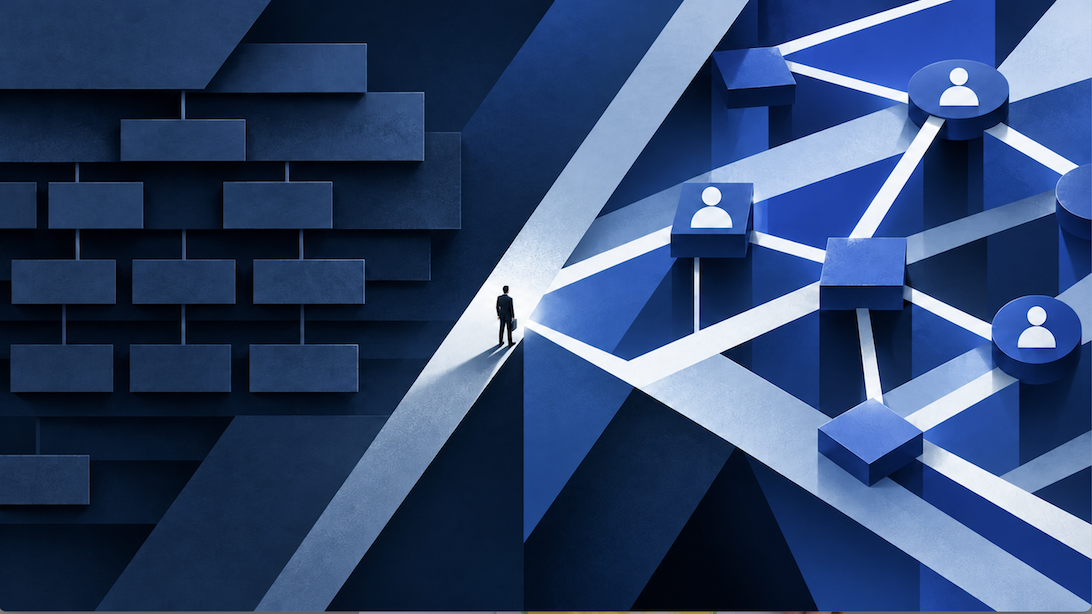
For decades, HR has been organized to build programs. A center of excellence designs a solution. HR business partners take it into the business. Shared services may administer it. Leaders launch it, measure adoption and move to the next priority.
That model assumes the problem, technology, and employee expectations will remain stable long enough for a program to be designed, implemented, and institutionalized. That assumption is becoming harder to defend.
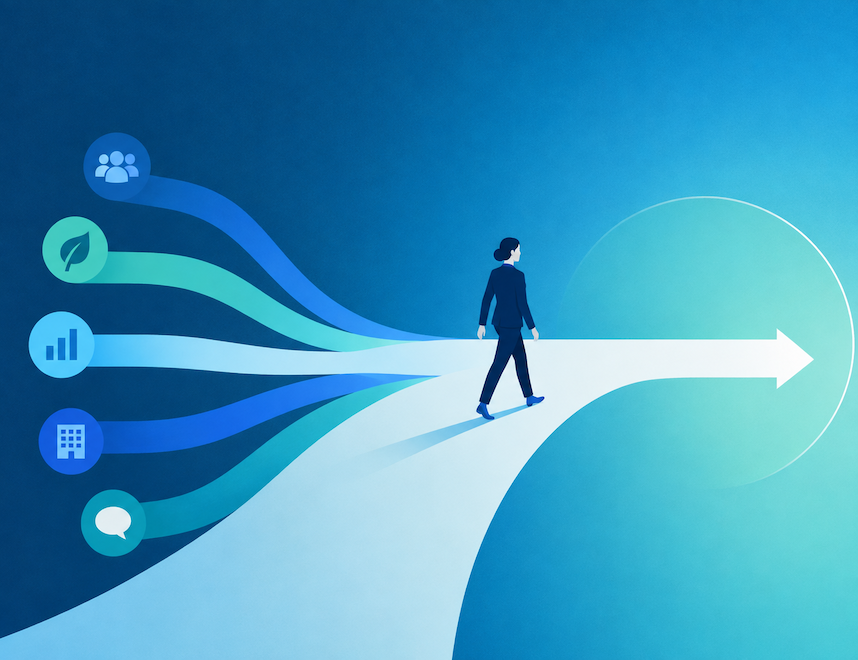
Across recent M1 peer conversations, including meetings in London and Dallas and virtual discussions on AI and workforce transformation, a different model has begun to take shape: persistent, cross-functional teams that own an employee or business outcome and continuously improve it. The distinction is more consequential than the language suggests. Traditional HR builds programs. Product HR owns experiences.
Why the program model is reaching its limits
AI is accelerating the shift, but it is not the only reason for it. Employee experiences already cut across the boundaries of traditional HR functions. Onboarding, for example, is not simply a talent acquisition program. It involves technology access, payroll, manager behavior, learning, organizational context, workplace norms and the quality of the employee’s first interactions.
Yet those components are often managed by different teams, with different systems, measures and planning cycles. No one owns the complete experience.
AI makes those fractures harder to ignore. An AI-enabled HR experience may include an agent, a data layer, several underlying systems, automated decisions and points at which a person must step in. It cannot be designed once, handed to operations and considered complete. Models change. Tools improve. Employee behavior shifts. New risks emerge.
The “product” therefore needs an owner long after launch.
One M1 peer in London raised the structural question directly: Should HR reorganize around products, as parts of IT already have, rather than preserve the existing COE model and simply assign agents to each function?
That is the right question. Adding AI to the existing structure may make individual processes faster. It does not necessarily produce an excellent employee experience or a better results.
How to begin without reorganizing all of HR
Moving toward a product model does not require an immediate enterprise-wide restructuring. A more credible starting point is to select one important experience and prove the model.
1. Identify the leader who will own the outcome
Choose a leader with the authority and credibility to work across HR, technology, operations and the business. The best choice is not necessarily the person who owns the current process; it is someone who can make tradeoffs across functions and stay accountable for the experience after launch. Ultimately, this leader should be someone who understands both the business and how to surface manager and employee objectives
Give that leader clear decision rights and an enduring mandate. Without both, the effort is likely to become another temporary project coordinated through the same functional handoffs the product model is meant to overcome.
2. Choose a problem worth owning
Start with a consequential experience that crosses functional boundaries and contains visible friction. Onboarding, internal mobility, manager support or workforce redeployment could each qualify.
Define the problem from the user’s perspective, not from the perspective of the HR function that currently owns the process.
3. Map the work at the task level
Document what actually happens, including manual workarounds, decisions, systems, handoffs and points of delay. Identify where AI or automation could help, but do not begin with a preferred tool.
The goal is to redesign the work, not merely digitize the current process.
4. Decide where people matter most
Mark the moments that require empathy, judgment, trust, escalation or accountability. Treat these as design requirements rather than inefficiencies awaiting automation.
This also gives employees a clearer answer to a question many are already asking: What is the distinctive human contribution to this work?
5. Form a persistent, cross-functional team
Bring together the capabilities required to solve the whole problem: HR expertise, technology, analytics, operations, experience design and relevant business representation.
Give the team authority to change the experience, not merely recommend changes to several functional owners.
6. Define an outcome, not a launch date
A program might be judged by whether it launched on time or reached an adoption target. A product needs an enduring measure of value.
Depending on the problem, that could be time to productivity, successful internal moves, manager effectiveness, resolution quality or employee effort. The measure should reveal whether the experience is improving, not simply whether people used it.
7. Establish a release-and-learning rhythm
The team should continue gathering feedback, examining data and improving the product after launch. The work is never completely finished because the employee need, organizational context and available technology will continue to change.
That ongoing ownership is the heart of the model.
A management discipline, not a new label
There is an obvious risk in the product conversation: organizations can rename programs as products while leaving every underlying behavior untouched.
Do not let this happen: A program manager becomes a product owner, but funding remains annual. Functional leaders retain approval over every decision. Technology remains separate from HR design. The team disbands after implementation. Success is still measured by launch and adoption. That is product language without product discipline.
The real shift is from delivering HR activity to owning an outcome. It requires different teams, funding, measures and decision rights. It also requires leaders to tolerate iteration: a product is expected to evolve because learning is part of the work.
AI is making that evolution more urgent, but the case for it is broader. Employees do not experience HR as a collection of COEs, platforms and transformation projects. They experience moments: joining, learning, performing, moving, leading and leaving.
The question is whether anyone owns those moments from end to end. The next HR operating model may be built around the leaders who do.